

Direct answer
Dutch DPA Uber automated decision making fine driver deactivation October 2026: what CRM buyers should take from it
The EDPB published an October 8 national-news summary saying the Dutch DPA fined Uber EUR 824,990,000 for unlawful automated decision-making and insufficient information about profiling. The summary says the AP found that Uber made fully automated temporary or permanent deactivation decisions affecting drivers, and that Uber has appealed with no final judicial decision yet. CNIL's August account says the case arose from driver complaints and concerned account disconnections tied to suspected fraud or low ratings. Support-operations buyers should treat the story as a human-review evidence warning: automated suspensions, account blocks, eligibility decisions and service restrictions need notice, appeal, reviewer and correction proof.
Published 10/13/2026. News event: 10/8/2026.
What happened
- The EDPB's October 8 summary says the Dutch AP fined Uber over automated decision-making and insufficient information about profiling.
- The EDPB summary says the decisions concerned temporary or permanent deactivation of driver accounts and that Uber has appealed.
- CNIL said the complaint path involved more than 170 drivers and GDPR cooperation because Uber's European headquarters are in the Netherlands.
- This article treats the decision as a support-ops evidence trigger, not as a final court ruling or a claim about every automated workflow.
Why this is trending
- Automated account restrictions are common in support, trust-and-safety, fraud, marketplace, delivery and subscription workflows.
- A support desk may own the appeal, explanation and recovery path even when a risk model or automated rule made the first decision.
- This is distinct from recent generic agentic-AI coverage because the buyer evidence is human review for materially affecting account actions.
The CRM Costs take
An illustrative support operation may use automation to pause an account after fraud signals, low-quality ratings, payment mismatch, safety flags or policy violations. The user still needs a clear notice, a way to contest the action, a human reviewer with authority, an explanation record and evidence that corrections were applied. This framework is a planning aid, not legal advice or a finding about any buyer's own obligations.
Human Review Evidence Map
An original support-operations map for decision inventory, human review, notice, appeal evidence, input controls and retention proof.
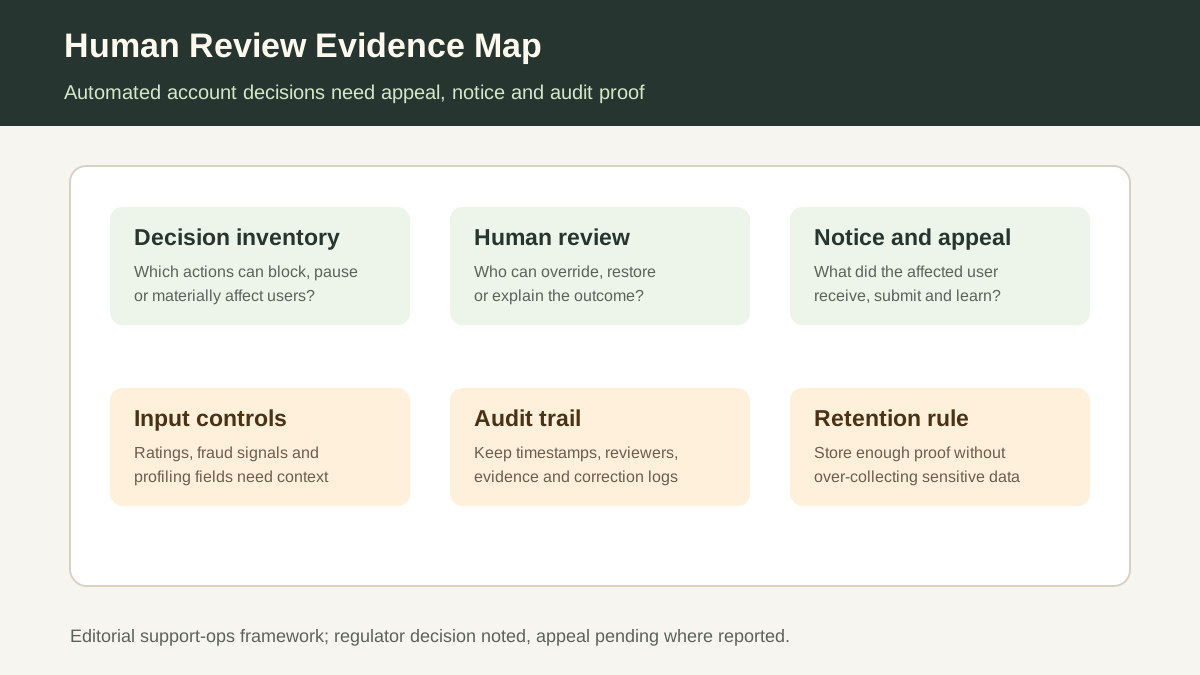
List all materially affecting automated actions, owners, source systems and support-facing status labels.
Define reviewer authority, evidence access, override reasons, escalation rules and quality sampling.
Write plain-language reason categories, profiling disclosures where required and support scripts tied to actual signals.
Retain appeal intake, user evidence, reviewer notes, decision timestamp, restoration action and user notification.
Review signal quality, dispute handling, stale-data limits, source accountability and model/rule change logs.
Set retention windows for notices, appeal evidence, reviewer actions, corrections and audit samples.
What buyers should do next
Buyer FAQs
Was there a final court ruling against Uber?
The EDPB summary says Uber has appealed the fine and that there is no final judicial decision yet. Buyers should preserve that distinction.
Does this apply only to ride-hailing platforms?
No. The buyer lesson applies to any support or trust workflow where automation can materially affect an account, payout, eligibility or service access.
Can a chatbot handle the appeal?
A bot can collect information, but materially affecting decisions need a defined human review and authority model where law, policy or buyer risk requires it.
Is this legal advice?
No. It is an operations evidence map. Legal owners should review actual automated-decision, privacy and appeal obligations.