

Direct answer
Contentsquare AI shopping mismatch CRM knowledge cost map: what CRM buyers should take from it
Contentsquare's AI shopping survey turns knowledge drift into a CRM cost issue. When AI assistants recommend products but the website, product data or support script does not confirm the recommendation, shoppers may continue researching, switch brands or abandon the purchase. CRM buyers should map the cost of keeping product pages, knowledge articles, CRM fields, AI answers, support scripts, offers and recovery workflows aligned.
Published 9/13/2026. News event: 9/9/2026.
What happened
- Contentsquare released survey findings in September 2026 based on 2,000 consumers in the United States and France.
- CX Dive reported September 9 that 97% of shoppers would reconsider an AI-recommended purchase if the website experience disappoints.
- The same CX Dive article reported that 57% would keep researching, 23% would switch brands and 16% would abandon the purchase after a poor website experience.
- CX Dive also reported that about 1 in 5 consumers said an AI shopping assistant had offered information that differed from a brand website, while another 1 in 5 said AI did not provide enough detail.
- Retail Customer Experience reported September 11 that 36% of shoppers say AI has replaced traditional search engines for at least some shopping activity.
- PPC Land noted that the survey gives marketers a post-click measurement problem: visibility in AI answers creates value only if the destination experience converts.
Why this is trending
- AI search, AI shopping assistants and answer engines are creating a new handoff from recommendation to website, cart, CRM and support.
- AEO and GEO spending can expose weak product data faster by sending shoppers to pages that do not match the AI-generated expectation.
- CRM teams often own the messy middle: product attributes, service promises, entitlements, offers, case reasons, transcripts, agent scripts and escalation notes.
- Knowledge drift creates cost even when the AI assistant is outside the company because the customer blames the brand when the site and answer disagree.
- The story gives buyers a current metric for a familiar operations problem: inaccurate CRM and product knowledge now leaks directly into acquisition economics.
The CRM Costs take
A CRM buyer should not evaluate AI shopping readiness only through traffic or brand-visibility dashboards. Ask whether the product record, website page, FAQ, knowledge article, bot response, support script, offer logic and escalation path say the same thing. If they do not, AI-referred shoppers create support tickets, abandoned carts, attribution confusion and expensive cleanup work.
CRM Knowledge Drift Cost Map
A CRM and support-ops buyer map for budgeting product-page accuracy, AI answer alignment, CRM field quality, offer rules, support recovery and measurement.
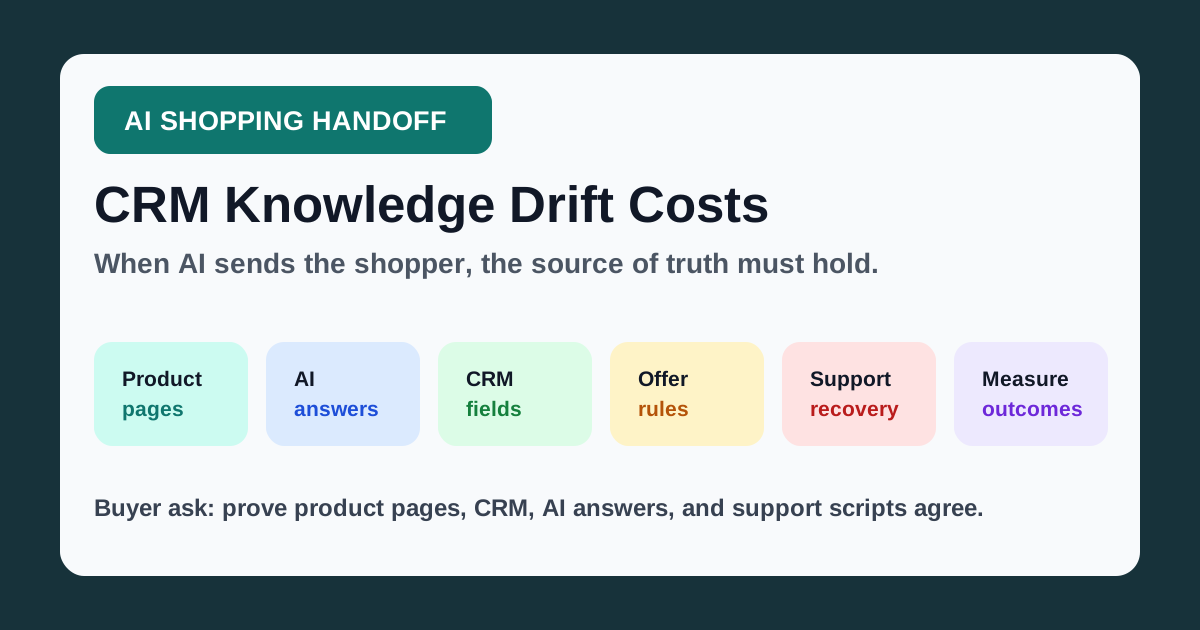
Assign product-page owners, review cadence, field dependencies and a rollback process for outdated content.
Sample AI referral queries, compare answers with canonical pages and publish missing detail in crawlable content.
Clean fields for referral source, product family, entitlement, offer version, rejection reason and recovery status.
Create an offer-rule register with owner, start date, end date, excluded products and escalation rule.
Create a mismatch reason code, make-good policy, escalation note and closed-loop content update workflow.
Join referral, page, cart, chat, ticket and CRM outcomes in one review packet.
What buyers should do next
Buyer FAQs
Is this only an ecommerce issue?
No. Any CRM or support operation that receives leads from AI answers can face the same drift: the assistant sets an expectation, then the site, sales rep or support agent has to confirm it.
What is CRM knowledge drift?
It is the gap between what product pages, CRM records, knowledge articles, AI assistants, support scripts and offer rules say about the same customer promise.
What should buyers budget first?
Start with canonical product data, crawlable answer pages, CRM field cleanup, support reason codes, offer governance and a review process for AI-referred mismatch tickets.