

Direct answer
California chatbot safety CRM compliance cost map: what CRM buyers should take from it
California's September 10, 2026 child-safety package makes chatbot compliance costs harder to hide. Governor Newsom's office said the laws strengthen safeguards for companion chatbots, prohibit addictive features for users under 16 on social platforms, and expand privacy protections for children. AP reported that the package includes AI chatbot risk assessments and penalties up to $1 million per child for certain negligent child-harm findings. CRM and support buyers should map which bots, copilots, portals and outsourced agents can interact with minors, detect crisis language, use personal data, trigger parent or guardian controls, or require human escalation.
Published 9/11/2026. News event: 9/10/2026.
What happened
- Governor Newsom signed the child-safety package on September 10, 2026 and said California is strengthening protections for children online and when using AI.
- The Governor's office said Adam's Law requires companion-chatbot protections including crisis protocols for suicidal ideation, parental controls, safety-setting notifications, independent child-safety audits and annual risk assessments.
- The same package bans covered social platforms from providing users under 16 with addictive features such as autoplay and algorithmic feeds based on user history and profile.
- The package also expands protections around AI-generated child sexual exploitation material, targeted advertising, K-12 pupil data and school-issued devices.
- AP independently reported that the laws include penalties up to $1 million per child for certain negligent child-harm findings and include AI chatbot risk-assessment requirements.
- The Guardian reported that the package drew praise from child-safety advocates and concerns from digital-rights groups about youth speech and access tradeoffs.
Why this is trending
- The laws turn chatbot safety from a product-trust issue into a budget line for legal review, risk assessment, audit evidence, escalation design and vendor management.
- The package connects AI companion-chatbot safeguards, social-platform design, K-12 data, parental controls and crisis protocols in one public policy moment.
- CRM teams increasingly embed bots, copilots, knowledge assistants and outsourced human agents into customer-support workflows that may include teens or family accounts.
- Compliance cost is broader than software: teams need intake labels, safety playbooks, escalation staffing, QA evidence, data-retention rules and proof that controls worked.
- The debate also reminds buyers that overbroad age gates and controls can create customer-experience, privacy and accessibility costs if they are not designed carefully.
The CRM Costs take
A CRM buyer should not wait for counsel to decide whether one support bot exactly fits a companion-chatbot definition before mapping the risk. Ask which workflows can engage minors or parents, which customer fields reveal age or school status, what happens when a user mentions self-harm, how parental or guardian controls are handled, which vendor trains or stores conversation data, and what evidence the team can export if regulators, customers or executives ask for proof.
Chatbot Child-Safety Compliance Cost Map
A CRM and support-operations map for budgeting chatbot age signals, crisis routing, parental controls, audit evidence, data boundaries, vendor notices and human escalation.
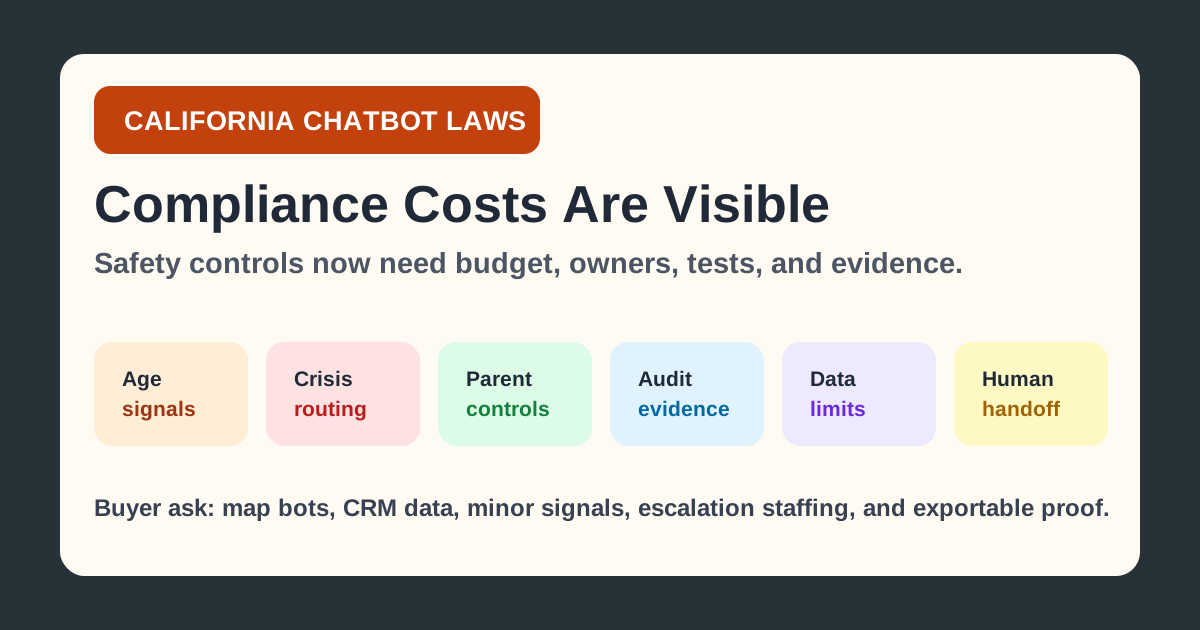
Create age-signal labels, field rules, privacy limits and escalation flags before expanding bot automation.
Define crisis categories, block unsafe automated replies, route to trained humans and retain QA-safe evidence.
Budget workflow design for guardian identity, notice templates, consent handling and dispute review.
Set evidence owners, retention rules, audit cadence, red-team samples and executive review checkpoints.
Minimize fields, separate child-related data, document retention settings and verify vendor subprocessors.
Make handoff mandatory for defined signals and test wait time, owner coverage, notes and closure evidence.
What buyers should do next
Buyer FAQs
Does this mean every CRM chatbot is covered by Adam's Law?
No. Coverage depends on the specific law, product design, users and jurisdiction. The buyer takeaway is practical: support teams should still map child-safety, crisis, age-signal and data-boundary costs before increasing chatbot automation.
What cost do teams usually miss first?
Evidence labor. Teams budget the chatbot license but forget risk assessments, QA samples, escalation training, audit exports, retention reviews and issue remediation.
Why include digital-rights concerns in the buyer map?
Because safety controls can create privacy, speech and access tradeoffs. A durable CRM workflow needs targeted controls and review evidence, not only a broad block or a vague warning.